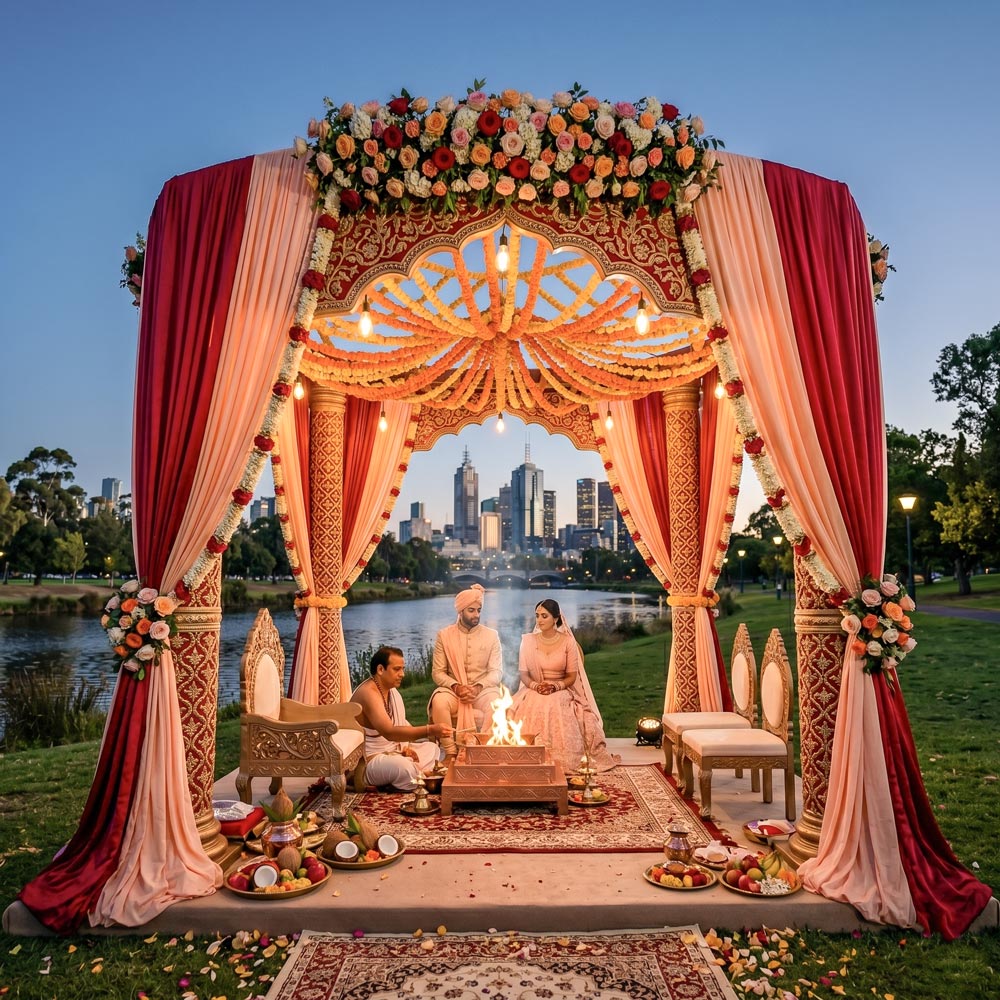
A Hindu wedding rarely unfolds in a straight line. It moves through ritual, sound, colour, family energy and sacred pauses, often all within the same hour. That is why 5 things your Hindu wedding photographer in Melbourne needs to know is not a casual checklist. It is the difference between simply recording a ceremony and preserving its heritage, rhythm and emotional weight with precision.
For couples planning a celebration layered with tradition, scale and intimacy, cultural fluency matters as much as artistic style. A refined visual team should understand when a moment is symbolic, when it is deeply personal, and when it passes in seconds never to be repeated. In Hindu weddings, those distinctions shape the entire story.
The strongest Hindu wedding coverage begins with respect for sequence. Rituals are not decorative moments placed into a timeline for visual effect. They carry spiritual meaning, family significance and, often, regional variation. If your photographer does not understand how one ritual leads into the next, they risk missing the emotional logic of the day.
This becomes especially important during ceremonies such as the Ganesh Puja, Kanyadaan, Hastamilap, Mangal Pheras and Saptapadi. These moments are not interchangeable. Each one marks a shift in the narrative of the wedding. The imagery should reflect that progression, not treat the mandap as a single static backdrop.
In Melbourne weddings, where ceremonies often run to venue schedules and multi-event logistics, timing can tighten quickly. Priests may adjust the flow, families may step in, and rituals may move faster than expected. A photographer with genuine Hindu wedding experience knows how to anticipate rather than react. That anticipation is what allows sacred moments to be captured with calm, not chaos.
Luxury wedding imagery depends on light, but Hindu weddings often present one of the most technically demanding lighting environments in the industry. A mandap can be visually stunning while also being difficult to photograph well. Fire from the havan, mixed indoor lighting, floral ceilings, strong midday sun or dim reception-style ballrooms all change how skin tones, fabrics and gold detailing are rendered.
A photographer who regularly covers Hindu weddings knows that exposure is not just a technical setting. It shapes mood, depth and realism. Rich reds, maroons, emeralds and ivory tones need to remain elegant rather than oversaturated. Jewellery should glow without becoming harsh. Skin should look luminous and true, even when surrounded by bright decor or shifting ceremony light.
This is where experience matters more than theory. The photographer needs to work confidently in changing conditions while maintaining an editorial finish. In practical terms, that means understanding how to preserve the atmosphere of the agni, the softness of family portraits under the mandap, and the grandeur of wide ceremonial frames without flattening the scene.
One of the most overlooked truths about Hindu weddings is that they are rarely centred on the couple alone. They are built around family presence, intergenerational blessing and communal participation. The emotional architecture of the day lives not only in the bride and groom, but in parents during Kanyadaan, siblings during playful rituals, and elders whose expressions hold decades of memory.
A photographer who understands this will not approach the day like a standard portrait commission. They will read the room. They will know when to hold a frame on a mother adjusting her daughter’s dupatta, when to step back for a wider family exchange, and when a grandparent’s quiet expression carries more emotional gravity than the staged formalities.
This sensitivity is especially important in large Melbourne celebrations where guest counts can easily stretch into the hundreds. The challenge is not just coverage. It is discernment. Not every moment deserves the same visual weight, and not every family interaction should be interrupted for direction.
The best work in this space balances cinematic composition with cultural instinct. It captures grandeur without losing intimacy. That is often what families treasure most years later.
If you are searching for 5 things your Hindu wedding photographer in Melbourne needs to know, this one is critical. Hindu weddings move through very different emotional registers, and each demands a different photographic approach.
The baraat is kinetic. It is loud, celebratory and full of movement. Coverage here needs pace, spatial awareness and confidence in crowded conditions. A photographer must track energy without reducing the event to visual noise. Strong baraat imagery should still feel polished, with clear subjects, layered composition and a sense of scale.
The bridal entrance is different again. It often carries anticipation, softness and symbolism. Here, timing becomes more delicate. The right frame may be in the glance between family members, the measured steps toward the mandap, or the groom’s reaction as the scene shifts.
Then comes the ceremony itself, where restraint matters. Sacred rituals are not the place for intrusive direction or constant repositioning. The visual team needs to know when to move, where to stand, and when stillness is the most respectful choice.
That range is what separates generic event coverage from crafted Hindu wedding storytelling. One wedding day can require documentary reflexes, portrait sensibility and ceremonial discretion, sometimes within minutes of each other.
There is no single version of a Hindu wedding. Gujarati, Punjabi, Tamil, Telugu, Marathi, Bengali and Nepali Hindu ceremonies can differ in flow, symbolism, attire and family customs. Even within the same cultural background, modern couples may blend traditions, shorten certain rituals or design a wedding that honours heritage while reflecting their life together in Australia.
A sophisticated photographer never assumes. They ask the right questions before the day. Which rituals matter most to you? Will there be a first look, or do you prefer a traditional reveal? Are there family members whose presence is especially significant? Are there customs that may be unfamiliar to a general wedding vendor but central to your story?
This preparation is not administrative. It directly shapes the quality of the imagery. When a team understands what holds emotional and ceremonial importance, they can prioritise it with care. They can also plan portraiture and logistics around the natural flow of the celebration, rather than forcing the day into a generic run sheet.
For multicultural weddings, this becomes even more nuanced. Some couples blend Hindu rituals with Western ceremonies, civil proceedings or reception formats that carry a completely different visual language. The coverage should feel coherent across all of it. Not fragmented, not performative, and never disconnected from the people at the centre of it.
A beautiful portfolio is only the beginning. When you are choosing a Hindu wedding photographer in Melbourne, what you are really choosing is someone’s ability to understand meaning under pressure. Can they recognise the difference between spectacle and significance? Can they work within a sacred environment while still creating imagery that feels elevated, timeless and alive?
It also helps to consider scale. A compact temple ceremony needs a different approach from a ballroom wedding with several hundred guests, multiple outfit changes and back-to-back events. Neither is better. But each requires planning, visual discipline and cultural understanding tailored to the celebration itself.
Studios experienced in South Asian weddings, including Cinematic Shooter, approach these events as layered narratives rather than simple coverage blocks. That distinction matters because Hindu weddings are not built from isolated highlights. They are built from continuity – from the prayer before the entrance to the final blessing, from the private glance to the public grandeur.
When your photographer truly understands that, the final gallery feels less like a record of what happened and more like a visual inheritance. You should be able to see not just how your wedding looked, but how it moved, what it meant and who held it together.
Choose a team that knows the rituals, respects the emotion and can translate both into imagery with depth. Long after the flowers are gone and the music has faded, that understanding is what gives the photographs their staying power.
