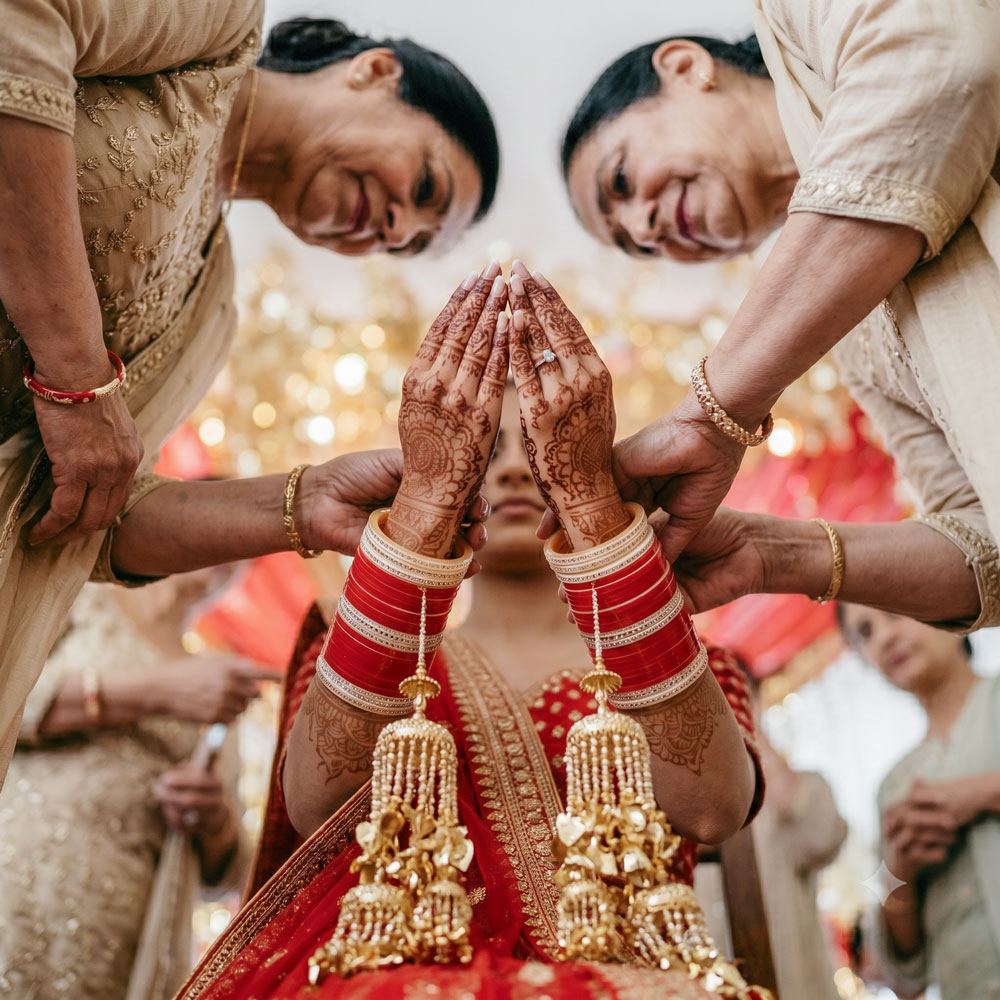
The chooda being fastened by family. The groom adjusting his kalgi before stepping out. Parents holding composure for everyone else, then losing it for one fleeting second. When couples ask what are the key Sikh wedding moments a photographer must capture in Australia, the real answer is not just a checklist of rituals. It is an understanding of rhythm, reverence and the emotional weight each moment carries within a modern Australian celebration.
A Sikh wedding is visually grand, but its power is found in intention. For a photographer, that means knowing when to step back for stillness, when to move in for intimacy, and when a single frame needs to hold heritage, family and atmosphere all at once. In Australia, where Sikh weddings often unfold across gurdwaras, private homes, luxury venues and expansive reception spaces, that awareness matters even more. Distances, light, timing and multicultural guest dynamics all shape how the day should be documented.
The most important moments begin well before the Anand Karaj. Sikh wedding coverage should preserve the emotional architecture of the full celebration, from preparation through to farewell and reception energy. A polished gallery is never built on ceremony images alone. It is built on context.
Some of the most elegant frames happen in the quieter hours. Bridal preparation is not simply about jewellery, fabric and finishing touches, though all of those matter. It is also where anticipation lives. The tying of the lehenga or suit details, the final drape of the dupatta, the close-up of the kaleere, the reaction of a mother or sister seeing the bride fully dressed – these are foundational storytelling images.
On the groom’s side, preparation deserves equal attention. The pagh tying, the setting of the kalgi, the straightening of the sherwani and the exchange between brothers, cousins or elders often carry a restrained, masculine emotion that photographs beautifully when handled with editorial sensitivity. In Sikh weddings especially, these moments establish dignity and presence before the larger movement of the day begins.
If the bride’s family is observing the chooda ceremony or related pre-departure rituals, these should be photographed with care and cultural fluency. Hands, expressions and intergenerational detail matter here more than wide spectacle. The emotional register tends to be intimate, and the best coverage respects that rather than turning it into performance.
Not every Australian Sikh wedding includes every traditional element in the same way. Some families keep ceremonies highly traditional, while others streamline timings around venue schedules, travel or mixed-cultural planning. A strong photographer reads those variations early and captures what is meaningful to that family, not what appears on a generic run sheet.
Arrival sequences are among the most cinematic parts of the day. They introduce momentum, family energy and the scale of the celebration.
Whether the groom arrives with a lively entourage or a more composed entrance, this sequence deserves layered coverage. The portraits, the greeting from family, the movement of guests and the atmosphere outside the gurdwara all create visual tension before the ceremony begins.
The Milni is especially significant. It is not merely an exchange of garlands or greetings. It is a formal meeting of families and a symbolic moment of respect between key relatives. A photographer should capture both the structure of the ritual and the expressions around it – pride, warmth, nervousness, relief. In Australia, where families may have travelled from different states or overseas, these reunions can carry even greater emotional depth.
The transition into the gurdwara changes the visual language of the day. Energy gives way to calm. Shoes are removed, heads are covered and the atmosphere becomes more devotional. This is where experience matters. Coverage must remain discreet and respectful while still preserving the beauty of the setting, the symmetry of the space and the spiritual focus of the ceremony.
When people ask what are the key Sikh wedding moments a photographer must capture in Australia, the Anand Karaj is naturally central. Yet photographing it well requires more than standing at the front and taking wide shots.
Depending on the family and gurdwara, the bride’s entrance may be understated or deeply emotional. Either way, it is a crucial narrative beat. The walk in, the first glance between the couple, and the parents’ expressions often create some of the most treasured images in the final collection.
The Palla ceremony marks a meaningful transition and should be documented with clarity. This is not a moment to miss through poor positioning or hesitation. The frame needs context, but it also needs intimacy. Hands, fabric, eye contact and the presence of elders all contribute to the significance of the image.
The four Laavan are among the defining images of a Sikh wedding. They must be photographed with reverence and timing. Each round around the Guru Granth Sahib carries spiritual meaning, and the visual challenge lies in honouring that rhythm while creating images that feel composed rather than repetitive.
This is where technical mastery and cultural understanding intersect. Light in many Australian gurdwaras can vary dramatically. Movement is continuous, and access may be limited by the sacred nature of the ceremony. An experienced photographer anticipates each rotation, preserves the solemnity of the moment and captures both the wider scene and the finer emotional detail.
Some of the most affecting images are not of the couple at all. They are of parents seated quietly in prayer, grandparents watching with pride, siblings exchanging glances, or younger relatives absorbing the moment. These reaction frames give the ceremony emotional scale. Without them, the story can feel visually complete but emotionally thin.
After the formal ceremony, there is often a subtle shift from spiritual focus to visible joy. The signing, blessings and first greetings as a married couple are essential transitional moments. They often happen quickly and can easily be undercovered if the team is too focused on portrait logistics.
Portraits after the Anand Karaj should never feel disconnected from the day’s emotional tone. Yes, the couple needs beautifully directed imagery. But family portraiture is equally important in Sikh weddings, where kinship sits at the centre of the celebration.
Large family groupings require efficiency, authority and calm organisation. In Australia, where weddings can include extensive family networks across cities and generations, this section needs to be managed with precision. The strongest portrait coverage balances polished composition with genuine warmth, so the images feel elevated rather than rigid.
For the couple, portraits should preserve the elegance of the wardrobe, the detail of the styling and the intimacy that may have been impossible to show during the ceremony. Natural light, architectural framing and measured direction all help create imagery that feels timeless rather than trend-driven.
A Sikh wedding is not fully told without the reception. The visual language shifts again here – from sacred ceremony to celebration, performance and atmosphere.
The reception entrance sets the social energy of the evening. It deserves coverage that captures scale as well as personality. Speeches are equally important, especially in multicultural Australian weddings where heartfelt tributes, humour and bilingual moments often unfold in quick succession.
If the couple shares a first dance or formal stage moment, the images need to carry mood, lighting and guest response together. A luxury wedding gallery should not isolate the couple from the room. It should show how the room moved around them.
Once formalities loosen, some of the most memorable frames emerge. Elders smiling from their tables, cousins on the dance floor, children asleep on chairs while the celebration continues – these are the human details that give the gallery longevity. They are often the images families return to years later.
At a premium level, reception coverage is not about photographing every person in the room for the sake of it. It is about recognising where emotion, style and energy are converging and preserving those moments with intention.
Sikh weddings in Australia often blend tradition with local logistics. Ceremony and reception may be in different parts of the city. Seasonal light can be harsh by midday and soft by late afternoon. Family structures may span local relatives, interstate guests and overseas loved ones attending multiple events. All of this affects timing, movement and the way moments unfold.
That is why the best coverage is never generic. It respects the sanctity of the gurdwara, understands the cadence of Sikh rituals and still delivers imagery with editorial grace. Studios with deep South Asian wedding experience, including teams like Cinematic Shooter, approach these celebrations with both discipline and instinct – because in a wedding of this scale and meaning, there is rarely a second chance at the frame that matters most.
The moments worth capturing are the ones that carry memory long after the day has passed: a prayerful pause, a proud embrace, the quiet certainty in a couple’s eyes as they begin married life surrounded by heritage and blessing.
We proudly photograph Sikh and South Asian weddings across Melbourne’s most vibrant Indian communities, including Craigieburn, Mickleham, Tarneit, Truganina, Point Cook, and Clyde North. These suburbs are home to many Indian, Sikh, Hindu, Muslim, and Nepali families who celebrate weddings rich in culture and tradition. With extensive experience covering South Asian weddings throughout Melbourne, we understand the customs, emotions, and key moments that matter most to your family. Our local knowledge allows us to capture every celebration with authenticity, creativity, and cultural respect.
