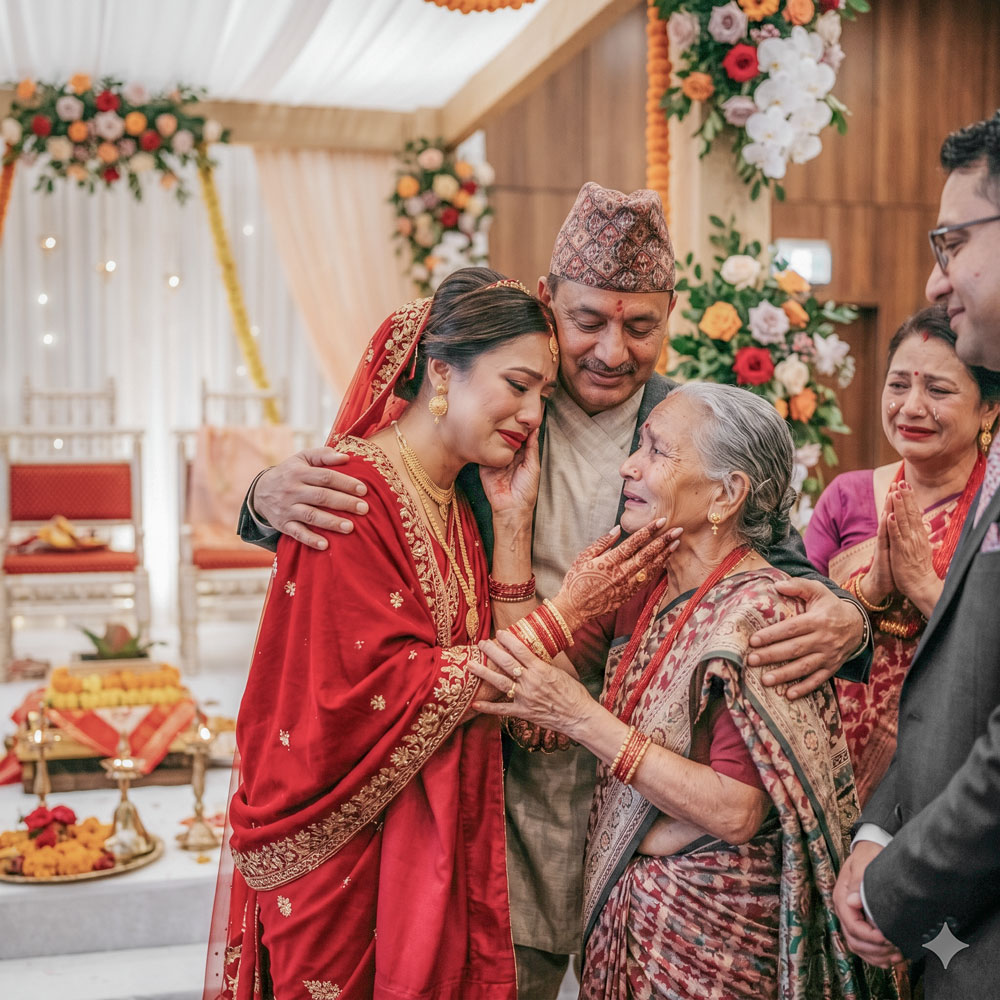
A Nepali wedding rarely unfolds in a straight line. It moves in layers – ritual, family, colour, music, reverence, celebration. For couples searching for Nepali wedding photography trends: blending tradition and modern style in Melbourne, the real question is not whether to choose tradition or contemporary style. It is how to honour both without losing the soul of either.
In Melbourne, that balance has become more sophisticated. Nepali couples are no longer asking for simple event coverage. They want imagery that respects the depth of each ceremony while still feeling polished, editorial and emotionally alive. They want grandparents framed with the same care as the couple portrait. They want sacred rituals documented with cultural fluency, then a reception filmic enough to feel lifted from a luxury fashion campaign.
The strongest shift is away from staged documentation and towards intentional storytelling. That does not mean every frame is candid, and it certainly does not mean tradition is treated casually. It means the coverage is built around narrative. The day is photographed as a visual legacy, not a checklist.
For Nepali weddings, this matters because the meaning often lives in small transitions as much as major moments. The preparation before a ceremony, the exchange between generations, the quiet pause before the celebration expands – these are not filler scenes. They are part of the cultural and emotional architecture of the day.
Modern Melbourne couples are also more visually literate than ever. They reference editorials, cinema, fine-art portraiture and luxury wedding campaigns. Yet they still want the authenticity of their own heritage. The most compelling photography trend, then, is not a surface-level aesthetic. It is the ability to move between documentary honesty and elevated direction with precision.
When Nepali wedding photography is done well, tradition is not treated as background styling. It is the centre of the frame. Clothing, jewellery, tika, ceremonial gestures, family blessings and sacred customs all carry visual weight, but they also carry context. Capturing them beautifully requires more than good equipment. It requires timing, restraint and cultural understanding.
This is why many premium couples are leaning towards photographers who know how South Asian and multicultural weddings actually flow. In a Nepali celebration, there are moments where intervention would be intrusive and others where gentle direction can refine the image without disturbing the ritual. Knowing the difference shapes the final gallery.
There is also a noticeable return to detail-rich imagery. Not detail for detail’s sake, but details with meaning – the texture of traditional attire, heirloom jewellery, ritual items prepared with care, the floral styling that frames a mandap or ceremonial space. These images create visual memory. Years later, they become the connective thread between atmosphere and emotion.
One of the most refined developments in recent years is heritage-led portraiture. These are portraits that feel contemporary in composition and lighting, yet remain rooted in identity. A bride in traditional dress may be photographed with editorial precision, but the image still feels culturally grounded rather than stylised beyond recognition.
This approach suits Melbourne particularly well. The city offers clean architecture, moody light, manicured gardens and grand interiors that pair beautifully with richly detailed South Asian attire. The result is a portrait style that feels international in finish, while still unmistakably Nepali in spirit.
Editorial photography has a strong hold on luxury weddings, and Nepali celebrations are no exception. Couples are drawn to imagery that feels composed, elegant and publication-worthy. But editorial does not mean stiff. At its best, it creates space for stronger posture, cleaner backgrounds, intentional light and visual cohesion, while preserving warmth and personality.
This is especially effective during bridal portraits, couple sessions and reception coverage. A well-directed portrait can highlight the craftsmanship of the outfit, the geometry of the venue and the emotional presence between two people. It gives the wedding a sense of visual permanence.
Still, there is a trade-off. If a team leans too heavily into fashion-inspired posing, the gallery can start to feel detached from the lived experience of the day. The strongest modern coverage avoids that trap. It allows for editorial beauty, but keeps the emotional pulse intact.
Another clear trend is the move towards cinematic tonality. Couples are favouring richer colour, refined contrast and skin tones that remain natural under complex wedding lighting. This is particularly important in Nepali weddings, where vivid reds, gold accents and layered ceremonial décor can easily overwhelm an image if not handled with discipline.
Timeless retouching has become part of that conversation. Luxury clients are not asking for heavy-handed filters or trend-driven edits that may age poorly. They are looking for polish – elegant, flattering, and true to the atmosphere of the day. The edit should elevate the image, not distract from it.
Many Nepali weddings are not a single-event production. They unfold across several gatherings, each with its own emotional register. Modern coverage increasingly reflects that by treating every event as part of one larger cinematic narrative.
Pre-wedding functions, family rituals, ceremony coverage and reception storytelling are now approached with continuity in mind. This means the visuals need to feel connected even when the settings, outfits and lighting conditions shift dramatically. A cohesive visual language across multiple days gives the final collection more depth and greater emotional rhythm.
For couples, this creates something more enduring than a highlight reel of isolated moments. It produces a story with progression – anticipation, ritual, intimacy, release and celebration.
One of the most meaningful changes in Nepali wedding photography trends: blending tradition and modern style in Melbourne is the renewed focus on family as narrative, not just attendance. In South Asian weddings, family has always been central, but modern luxury coverage is becoming more deliberate about how that is framed.
That means more intergenerational portraits with editorial care. It means paying close attention to parents during key rituals, and noticing the emotional geography of the room – who is watching, who is blessing, who is holding back tears. These are the images that often become the most valued over time.
For overseas relatives or family members unable to attend every event, this style of storytelling also holds deeper significance. The gallery becomes a bridge between presence and memory.
Candid photography remains essential, yet the trend is moving away from random volume and towards curation. Couples are not looking for hundreds of interchangeable reaction shots. They want candid imagery with shape, light and emotional timing.
This requires anticipation. A knowing glance during a ceremony, a grandmother adjusting a veil, the movement of guests entering a reception space – these moments feel effortless in the final collection, but they are captured through experience. Strong candid work is never accidental for long.
Location influences style more than many couples realise. Melbourne’s luxury hotels, garden estates, heritage venues and modern reception spaces allow Nepali weddings to be photographed with greater visual range. Soft daylight in a suite, dramatic architectural lines in the CBD, or expansive evening ambience at a reception all invite a more cinematic treatment.
That said, the venue should not overpower the wedding itself. The best images use the environment to support the couple’s story, not compete with it. A grand backdrop matters, but only if the photography still prioritises intimacy and cultural significance.
This is where experienced direction becomes valuable. The light, schedule and spatial flow of the venue all affect what is possible. A portrait session planned around the actual rhythm of the celebration will always feel more elegant than one forced into the wrong moment.
Trends are useful only when they serve the wedding rather than dictate it. For Nepali couples planning in Melbourne, the smartest approach is to choose a visual style that reflects who you are now while still feeling truthful in twenty years.
If your celebration is deeply traditional, your photography should not dilute that for the sake of minimalism. If your taste leans contemporary, that modernity can absolutely be present without stripping away ceremony and heritage. The most compelling galleries do both. They respect the gravity of ritual, then frame it with cinematic composition, refined lighting and editorial discipline.
Studios such as Cinematic Shooter understand that premium Nepali wedding coverage is not about choosing between heritage and style. It is about translating both into imagery with emotional precision.
The couples who love their photographs longest are usually the ones who resist extremes. They do not chase every passing aesthetic, and they do not settle for plain documentation either. They invest in work that understands symbolism, scale, intimacy and beauty in the same breath.
Your wedding does not need to look less Nepali to feel modern. It needs to be seen with enough artistry and cultural fluency that both qualities can live in the same frame.
Another emerging trend across Melbourne’s Nepali and broader South Asian wedding scene is the growing demand for culturally personalised storytelling. Couples in areas like Point Cook, Tarneit, Truganina and Craigieburn are increasingly looking for photographers who understand not only the visual side of a wedding, but also the cultural rhythm behind each event. This includes recognising the significance of family hierarchy, ceremonial timing, traditional blessings and the emotional importance of community presence. As multicultural weddings continue to evolve in Melbourne, couples are prioritising photography that feels deeply personal rather than generic — imagery that reflects both their modern lifestyle and their South Asian heritage with equal authenticity.
