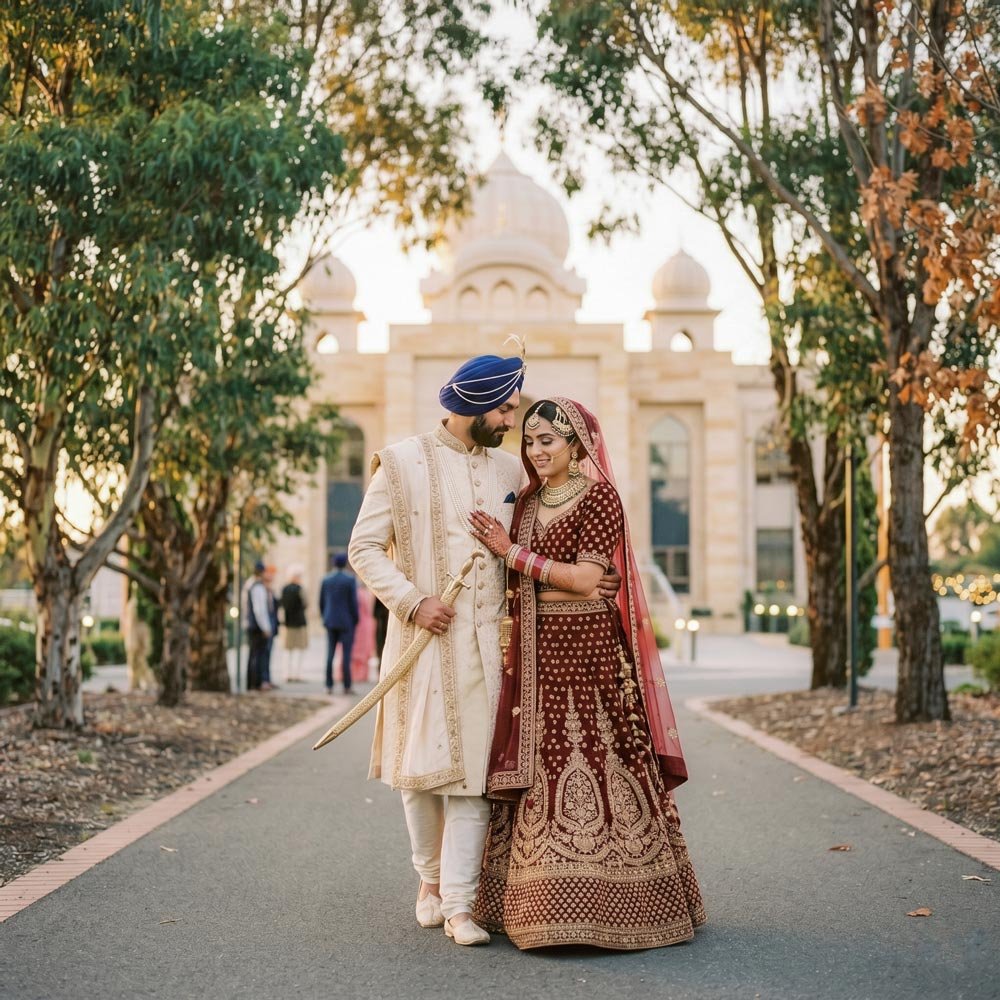
The first frame at a Sikh wedding is rarely the first frame of the day. It begins earlier – in the stillness before guests arrive, in the gentle fastening of kalire, in the quiet exchange between generations, and in the reverence that defines the Anand Karaj. That is why a guide to Sikh wedding photography at gurdwaras in Craigieburn and Blackburn must begin with more than logistics. It begins with understanding.
Sikh weddings carry a distinct rhythm. The energy can be grand, but the ceremony itself is grounded in humility, devotion, and presence. For couples planning their wedding in Melbourne’s north or east, the gurdwara setting shapes everything from visual composition to movement, timing, and etiquette. Great photography in this space is not about taking more images. It is about knowing when to step forward, when to stay back, and how to preserve both intimacy and heritage with precision.
Craigieburn and Blackburn are both home to vibrant Sikh communities, but from a photographic perspective, no two gurdwara weddings feel exactly the same. Architecture, available natural light, congregation size, management guidelines, and the pacing of the day all influence how the story should be captured.
Some ceremonies unfold in bright, open prayer halls with clean directional light. Others require a more restrained, documentary-led approach because space is tighter or movement around the Guru Granth Sahib must be especially limited. This is where cultural fluency matters. A photographer should not be learning the ceremony in real time. They should already understand the significance of the Milni, the emotional cadence of the Laavan, and the way family hierarchy often shapes who stands where and when.
For couples, this knowledge changes the final gallery. Instead of a collection of disconnected moments, the imagery holds continuity – from preparation through to ceremony and the gatherings that follow.
A gurdwara is not simply a venue. It is a sacred space, and that changes the way a visual team works.
The strongest Sikh wedding photography is discreet, observant, and technically controlled. Flash is generally inappropriate during the ceremony. Loud direction is out of place. Constant repositioning can interrupt the atmosphere. The work, then, relies on anticipation: reading expressions before they crest, understanding where the couple will pause during the Laavan, and composing with respect for the sanctity of the setting.
There is also a visual discipline unique to Sikh weddings. Head coverings, modesty, floor-level perspectives, and the positioning of the palki sahib all influence framing. In some moments, the most elegant image is not the closest one. A wider composition that honours the prayer hall, the sangat, and the ceremonial geometry can feel far more powerful than an aggressive close-up.
That said, restraint should never mean emotional distance. The finest coverage still finds tenderness – a father adjusting a groom’s safa, a bride lowering her eyes in a private breath before entering, a grandparent listening during kirtan with visible pride. These are not filler details. They are often the soul of the wedding narrative.
Many couples understandably focus on the Anand Karaj, but from a storytelling perspective, the day is richer than the central ritual alone. Sikh wedding photography at gurdwaras in Craigieburn and Blackburn should also account for the moments surrounding the ceremony – arrivals, greetings, shared langar, family portraits, and the emotional release that follows formal proceedings.
This is particularly important for large South Asian weddings where family presence is expansive and meaningful. The wedding is not experienced only by the couple. It is witnessed, carried, and celebrated across generations. A gallery should reflect that scale without losing the personal thread.
One of the most underestimated parts of gurdwara wedding coverage is timing. Not because Sikh ceremonies are chaotic, but because they are layered. There are often multiple events across the day, and each one asks something different of the visual approach.
Morning preparation usually offers the most controlled portrait opportunities. Details are fresh, outfits are immaculate, and there is space to create editorial imagery before the day gathers momentum. If your ceremony is scheduled earlier, preparation coverage needs to run with real discipline. Hair, makeup, dressing, family interactions, and travel should be mapped carefully so portraits never feel rushed.
At the gurdwara, lighting conditions may vary significantly between Craigieburn and Blackburn depending on the prayer hall, weather, and time of day. Midday ceremonies can introduce bright highlights near windows and softer ambient light toward the interior. A team experienced in luxury South Asian weddings will plan for this rather than react to it. The goal is consistent, refined imagery that preserves skin tones, fabric detail, and atmosphere.
Portraits after the ceremony are another area where timing matters. Some couples want a brief, elegant session immediately after family formals. Others prefer to reserve cinematic portraits for a separate location or later reception window. Neither choice is inherently better. It depends on how much breathing room exists in the run sheet and whether preserving time with guests matters more than creating a larger portrait sequence.
At Sikh weddings, family portraits can be extensive and deeply important. This is not the part of the day to improvise.
Strong formal coverage requires calm authority. The photographer must know how to move quickly, read family dynamics respectfully, and keep the energy polished rather than frantic. For premium weddings with large guest counts, this often means building a clear portrait sequence in advance, identifying senior family groupings early, and making sure elders are not left standing unnecessarily.
When done well, formals do not feel transactional. They feel composed, dignified, and efficient – preserving heritage while still leaving space for natural expression.
Respectful Sikh wedding photography starts well before the wedding day. Couples should have a clear conversation with their visual team about gurdwara protocols, family expectations, and any specific guidance from management.
Some gurdwaras are comfortable with quiet movement along the edges of the prayer hall. Others are more restrictive. Some families prefer minimal interruption during religious moments, while others place high value on capturing close emotional detail. These are not conflicts, but they do require alignment.
It is also wise to discuss dress standards for the crew, head coverings, footwear procedures, and whether video coverage will be present alongside photography. Coordination matters. A premium result depends on each creative team member understanding how to work in shared space without compromising reverence or visual quality.
For couples hosting broader celebrations beyond the gurdwara – such as a jaggo, sangeet, or reception – continuity in visual style becomes especially valuable. The ceremony should not feel aesthetically detached from the rest of the wedding story. The imagery can shift in energy, but it should still feel like one cohesive legacy.
The real question is not whether a photographer has covered weddings before. It is whether they understand Sikh weddings as lived tradition, not surface spectacle.
Look for a body of work that shows control in sacred indoor spaces, not only dramatic reception lighting. Look for family storytelling, not just couple portraits. Look for an eye that can hold both grandeur and restraint. In a gurdwara, technical skill matters, but sensitivity matters just as much.
For many couples, particularly those planning a large, multi-event celebration, there is also immense value in choosing a team that can move between documentary observation and editorial direction without breaking the emotional tone of the day. That balance is where luxury coverage truly sets itself apart.
At Cinematic Shooter, that balance is central to how Sikh weddings are documented – with reverence for ceremony, fluency in tradition, and a visual language shaped by timelessness rather than trend.
Your wedding photographs should feel like they belong to your family long after the day itself has passed. In a gurdwara, that means every image must carry more than beauty. It should carry respect, memory, and the quiet weight of heritage.
Planning a Sikh wedding in Craigieburn or Blackburn? Every Anand Karaj carries a beautiful balance of tradition, emotion, and family connection. From the quiet moments before the ceremony to the blessings shared inside the gurdwara, every detail deserves to be captured with respect and care.
At Cinematic Shooter Melbourne, we specialise in Sikh wedding photography in Craigieburn and Blackburn, creating timeless and cinematic imagery that honours your culture and preserves genuine emotions naturally. With experience covering weddings at Sri Guru Singh Sabha Gurdwara Sahib, 344 Hume Hwy, Craigieburn VIC 3064, and SGNSS Blackburn Gurdwara, 127 Whitehorse Rd, Blackburn VIC 3130, we focus on documenting every meaningful moment without interrupting the sacred atmosphere.
From elegant portraits to heartfelt family moments, we create wedding stories that feel authentic, emotional, and timeless.
