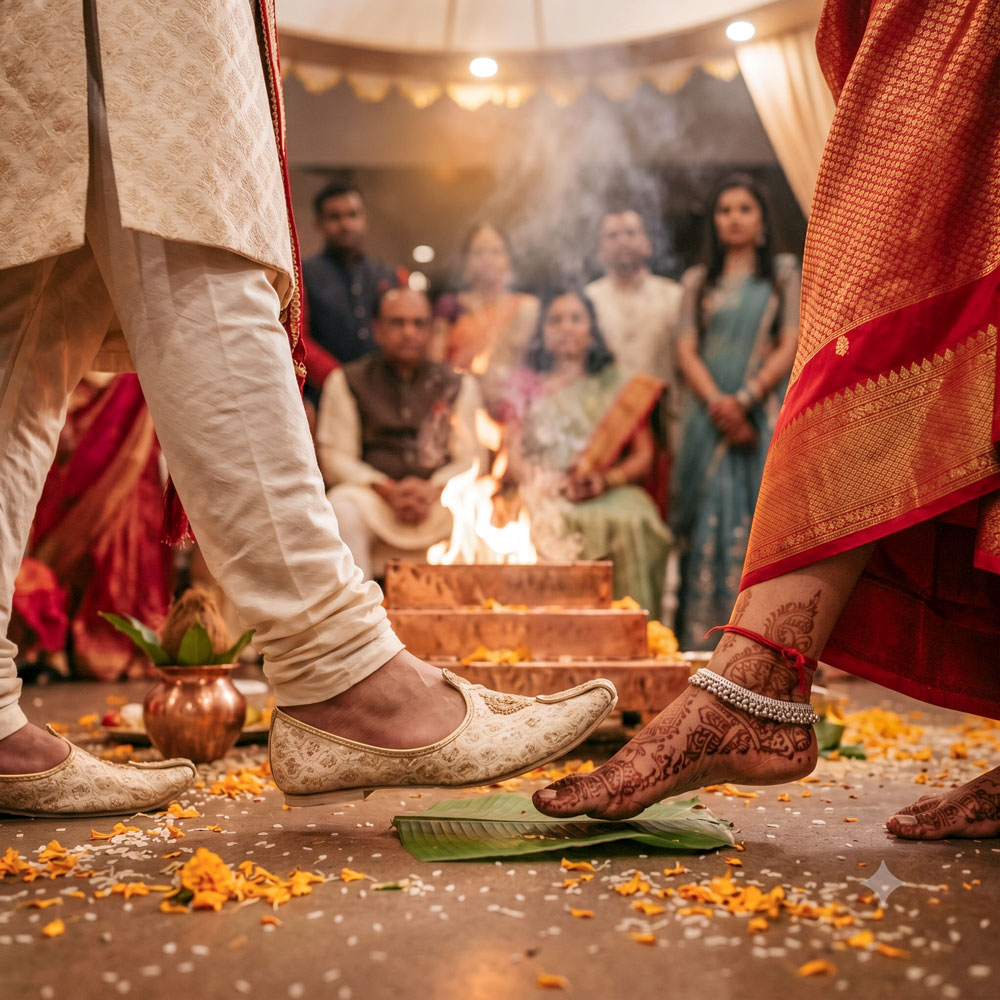
The fire is lit, the mandap falls quiet, and suddenly the room understands this is no longer just a celebration – it is a sacred transition. Couples often ask which Hindu wedding rituals are the most important to capture on film during an Australian ceremony, especially when timelines are tight, venues have restrictions, and family expectations are layered across tradition and modernity. The answer is not simply “film everything”. The answer is to identify the rituals that carry spiritual weight, emotional expression, and visual storytelling power, then document them with the care they deserve.
For a cinematic wedding film, the most important Hindu rituals are the ones that move the story forward. They mark consent, union, blessing, and the visible joining of two families. In Australia, that often means a beautifully adapted ceremony where tradition remains intact, but pacing, venue rules, and multicultural guest lists shape how the day unfolds. That is why cultural fluency matters as much as camera technique.
If we are speaking purely from a storytelling perspective, several rituals sit at the heart of the ceremony. They are not always the longest moments, but they are the moments your film will return to again and again because they hold meaning, symbolism, and emotional depth.
Before the formal ceremony begins, the groom’s arrival often sets the film’s opening energy. Whether the baraat arrives with dhol, dance, and full-scale grandeur or in a more intimate style suited to an Australian venue, it establishes rhythm, family pride, and anticipation. This is where movement matters – the joy of relatives dancing, the groom’s expression, the reaction of guests waiting at the entrance.
From a film perspective, the baraat gives scale. It tells viewers this is not a private exchange hidden away from community. It is a public, celebratory procession into marriage. If the wedding includes a milni or greeting between families, that should be captured closely as well, because it shifts the mood from spectacle to connection.
The bride’s entrance is often one of the most emotionally charged visual chapters of the day. In Hindu weddings, this entrance may be serene, regal, or deeply emotional depending on family tradition. Sometimes there is music and grandeur; sometimes the power lies in stillness.
On film, this moment matters because it introduces the bride not just as a beautiful subject, but as the emotional centre of the narrative. The glances from parents, siblings, and the groom can be as important as the entrance itself. In Australian ceremonies where timings are carefully managed, this moment can move quickly, so precision is essential.
The exchange of garlands is one of the clearest visual symbols of mutual acceptance. It is elegant, instantly recognisable, and full of personality. Some couples playfully resist each other as family members lift them higher. Others treat it with gentle reverence.
Either way, the jai mala deserves intentional coverage because it is one of the first visible acts of union. It also translates beautifully on film for guests who may not know every ritual in detail. They understand the moment instinctively.
The most important rituals in a Hindu wedding are usually those performed under the mandap before the sacred fire. These are the moments where cinematic beauty and spiritual significance meet. They should never be treated as background coverage.
Kanyadaan carries profound emotional and cultural weight. Traditionally, it is the moment the bride’s parents entrust their daughter to the groom, symbolising blessing, continuity, and the joining of families. In contemporary Australian weddings, the interpretation can vary. Some families preserve the ritual exactly; others adapt it to reflect more modern family values.
What matters on film is sensitivity. This is not a moment to overproduce. The strength of kanyadaan lies in hands placed together, bowed heads, moist eyes, and the quiet gravity of parental blessing. Even when families choose a more modern framing of the ritual, the emotional truth remains powerful.
The havan is visually and spiritually central. The fire is not simply decorative – it is witness, purifier, and sacred presence. Many key marriage vows and ritual actions occur around it, which makes it essential to film with care.
Australian venues sometimes place restrictions on open flame, smoke, or mandap layout. That can affect angles and movement, but not the importance of the ritual itself. A strong film captures the texture of the fire, the priest’s guidance, offerings being made, and the couple’s concentration as they move through each step.
If a couple includes the tying of the mangal sutra and the application of sindoor, these are among the most important close-up moments of the entire ceremony. They are intimate, symbol-laden, and often become signature shots in both film and photography.
These gestures are brief, which makes anticipation critical. You cannot recreate their emotional truth later. The detail of the jewellery, the bride’s expression, and the family response all matter. In a luxury wedding film, these moments are often where intimacy cuts through the scale of the event.
If there is one ritual that should never be underestimated on film, it is the saptapadi. The seven steps around the sacred fire are not just visually graceful; they represent the vows and shared commitments of marriage. For many Hindu traditions, this is the defining act that solemnises the union.
Cinematically, the saptapadi has everything a story needs – movement, symbolism, repetition, and ritual cadence. Yet it is also one of the easiest moments to capture poorly if the team does not understand its sequence. The camera must be ready for each step, the priest’s cues, the couple’s coordination, and the reactions from elders watching closely.
In Australia, the answer sometimes depends on how the ceremony has been adapted. Not every wedding includes every ritual in the same order. Some ceremonies are condensed for venue timing. Some blend Hindu traditions with a civil exchange or another cultural ceremony. Some are held in temples, others in luxury ballrooms, gardens, or private estates.
That means the most important rituals to capture on film are not only the traditionally central ones, but also the ones your families have prioritised. For one couple, that may be an elaborate baraat and full Vedic ceremony. For another, the emotional centre may be kanyadaan, the saptapadi, and blessings from grandparents who have travelled from overseas. A culturally experienced team plans for both ritual hierarchy and family nuance.
Blessings from parents and elders often become some of the most treasured moments in the final film. They may happen formally within the ceremony or immediately after. While they can appear quieter than the grand ritual highlights, they carry extraordinary emotional permanence.
These interactions matter because they root the marriage in lineage and heritage. A hand on the head, an embrace after the pheras, a grandparent’s expression of relief and joy – these are not filler shots. They are often the scenes couples revisit most years later.
Many people use pheras and saptapadi interchangeably, though traditions vary. If your ceremony includes the couple circling the sacred fire as part of the vows, those rounds are absolutely essential to capture. They are among the most iconic and spiritually significant images in any Hindu wedding film.
What elevates this moment is context. It is not enough to simply film the circles. A refined edit also holds the priest’s chant, the movement of garments, the closeness of family gathered around the mandap, and the emotional progression on the couple’s faces. That is what gives the sequence its sense of timelessness.
If the schedule becomes compressed or venue logistics become challenging, the non-negotiables are usually the bride and groom entrances, jai mala, kanyadaan if included, the sacred fire rituals, mangal sutra, sindoor if included, the pheras or saptapadi, and blessings from immediate family. These are the anchors of the ceremony film.
Beyond that, the most valuable approach is not chasing every second indiscriminately. It is filming with discernment. A luxury wedding film is built on moments with narrative gravity, not endless footage.
For couples planning a Hindu wedding in Australia, the best films come from teams who understand both the sanctity of the rituals and the choreography of the day around them. They know when to stay unobtrusive, when to move decisively, and when a fleeting glance between generations carries just as much weight as the ritual itself.
The rituals matter, of course. But what stays with you on film is how those rituals felt in the room – the reverence, the anticipation, the release, and the quiet certainty that something sacred has just begun.
Melbourne is home to some of Australia’s largest Indian and South Asian communities, with many Hindu weddings taking place in suburbs such as Tarneit, Truganina, Point Cook, Craigieburn, Mickleham, Wyndham Vale, Clyde North, and Berwick. We regularly film Hindu weddings for Indian, South Indian, Telugu, Tamil, Kannada, Malayalam, Gujarati, Marathi, and North Indian families across Melbourne and regional Victoria. From luxury ballroom celebrations to traditional temple ceremonies and private estate weddings, our team understands the customs, rituals, and cultural details that make every Hindu wedding unique. We also travel throughout regional Australia to document destination weddings with the same cinematic storytelling and cultural sensitivity that define every Cinematic Shooter film.
